High Quality Payroll and HR Services
Client Resources News & Tips Email Us 610-310-7615

Jul 02, 2026
The Art of the Employee Interview
You finally narrowed a large job applicant pool down to several strong candidates. The interview process will give you insights into your prospective employee. Read through for pro tips on how to conduct job interviews to find the best match for your team.
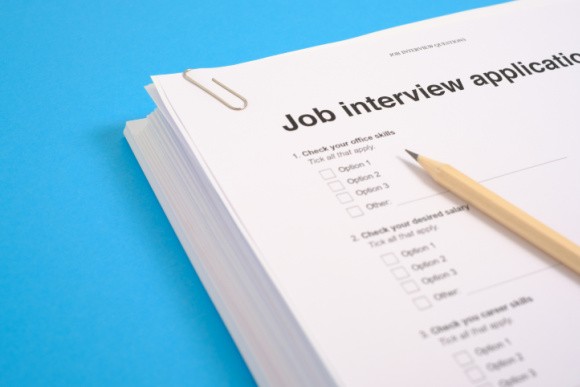
Job interviews are a key part of the selection process in which both the hiring manager and the interviewee are trying to learn as much as they can during a two-way conversation. Since job interviews generally last no longer than an hour, it goes without saying that first impressions count. A recent survey of 2,000 hiring managers found that about one-third knew within the first 90 seconds of the interview whether they would hire the person.
A successful interviewer needs to do their homework up front by understanding the qualifications and requirements of the role as outlined in the job description. Part of that research is to speak directly with the manager or supervisor about the job to better understand what they are looking for in a new hire. Make sure you have reviewed the candidate's resume thoroughly prior to the interview and prepare a list of questions that allows the candidate to elaborate on their qualifications.
To be fair, ask all candidates the same questions so you can compare their responses. Being a great interviewer is an art that improves with time and practice. Here are a few best practices for conducting stronger interviews:
- Be friendly. Start the interview by making small talk with the candidate to put them at ease. Questions about how their day has been going so far or if they had trouble finding the building are good ways to break the ice. You may even offer them water to make them feel comfortable. The candidate may even take a few sips to ground themself before launching into an answer.
- Be prepared. Anticipate and be ready to answer any questions the candidate may have about the open position, benefits or company culture. Start the interview with a brief overview of the company and the job. You may also review the candidate's social media profiles ahead of time to get a fuller picture of them. Many interviewers are impressed by candidates who understand the company, which shows they took the time to prepare before the interview.
- Be an active listener. During the interview, take notes on each candidate's answers. This is particularly helpful if you conduct several consecutive interviews. Referring to your notes afterward can be helpful when comparing the qualifications and personalities of each person.
- Be specific. Ask the candidate to clarify any information that may seem exaggerated. Request specific dates and numbers early in the interview so you can review them later. For example, ask them about the number of people they supervised or the total sales they made in the past quarter. If someone is being less than truthful about their experience, they may find it hard to recall the exact information they gave earlier.
- Be interested. Allow the candidate ample time to discuss their professional goals by asking what interests them about the job they are applying for. You may want to do this toward the end of the interview so that you can gauge their interest in your company and the position. Be open about compensation and ask if the salary is in line with their expectations. Hopefully they will be honest and tell you right away if they should still be considered for employment.
A hiring interview is a two-way conversation between an employer and a job candidate. When you choose the right person for the role, it's rewarding to know you've helped advance their career.
©2026

MORE RECENT NEWS…
Sep 24, 2026
Job Openings? Look Toward Community Colleges
Employers are painfully aware that they face a 21st-century skills shortage. Companies are bent on hiring a "new collar" workforce to keep up with advances in technologies like artificial intelligence and automation. Read through to learn about an untapped resource.
Sep 23, 2026
With the IRS, As with Courts, You're Entitled to Representation
If you're having a problem with the IRS, you have rights! For one, you don’t have to go it alone. You are allowed to have an expert in your corner. Read through for details on the regulations that protect you.
Sep 22, 2026
Just What Are 'Competitive Wages'?
Inflation is a key challenge that businesses of every size face when developing compensation strategies. Read through to see how your business can position itself in the competitive wage war to attract and retain employees.
Sep 21, 2026
What the Gig Economy Is Doing to Traditional Payroll Structures
The gig economy, characterized by companies hiring short-term, contract or freelance workers, has been surging since the 2020 pandemic when people were mandated to work remotely. By current estimates, one-third of American workers are doing some form of gig work. Read through to learn more about what this arrangement is doing to traditional payroll structures.
More News & Press can be found in our Archive.
Panacea Payroll
3277 West Ridge Pike
Suite A101
Pottstown, Pennsylvania 19464
610-310-7615

MEMBER OF








WE'RE SERIOUS ABOUT SECURITY
Staying resilient from malicious threats, cyber and physical, is critical in providing the exemplary value our clients expect from us. To do this, we integrate the National Institute of Standards and Technology's (NIST) Cybersecurity Framework that ensures our security procedures, policies, and infrastructure are up to the highest standard possible. Financial institutions, infrastructure management, defense, healthcare, and other heavily regulated industries that rely on stringent information safeguards use the NIST Cybersecurity Framework. We review our security policies and procedures frequently to ensure newly identified threat and vulnerability information is incorporated. Our network infrastructure and physical locations are continuously monitored for anomalies and uninvited guests. Additionally, our incident response and business continuity plans are tested frequently to minimize the likelihood of backup failures.
© 2026 Panacea Payroll, All Rights Reserved.