High Quality Payroll and HR Services
Client Resources News & Tips Email Us 610-310-7615

Aug 27, 2024
Payroll: Deadlines Are Key
If you’re new to the world of business ownership, you might be surprised to hear that you should schedule pay dates an entire year in advance. Read through to learn how to set deadlines so that your payroll department is as prepared as possible.
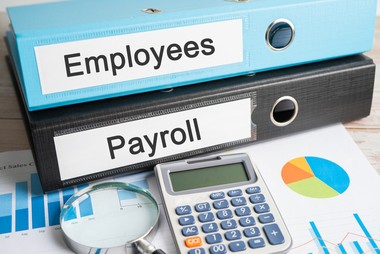
Simple payroll errors are avoidable, but if you don’t pay attention, you could end up facing consequences that cost thousands of dollars in compliance penalties. Not only that but you might have to deal with unwanted attention on both you and your payroll department.
To mitigate the risks and minimize unfavorable outcomes, pay attention to every payroll-related deadline. Keep all action items for every pay period in mind, too.
The best way to do this is by implementing a payroll calendar. These are specifically designed to help companies create a budget and plan for compensation expenses in advance over the course of an entire year.
But how can you make payroll calendars work for you? And what should you do if you are concerned about missing deadlines?
How to ensure that your company adhere to a set payroll schedule
It’s best to arrange payroll dates for each a calendar year before the start of the year. That way, you can budget better while maintaining compliance with wage payment rules and regulations. And when you utilize a detailed payroll calendar, you can not only pay attention to actual payday dates but also pay period end dates, time sheet due dates and the workdays covered by each pay period.
Payroll calendars ensure that payroll-related administration tasks are completed on time. In turn, this ensures that all payroll delays are avoided.
When to make adjustments to payroll-related deadlines
Under certain circumstances, you might need to adjust your payroll calendar if one or more paydays fall on the same day as a holiday. Likewise, adjustments may be required in situations where payday for the last weeks of the year ends up landing on a day in the following year. Last but not least, if there are three pay periods in a given month but you operate on a biweekly pay period schedule, plan to adjust accordingly.
Tips for preparing a payroll calendar
Start by figuring out how frequently your company plans to issue paychecks to your employees. Biweekly pay periods are the most common payday schedule, though it all depends on pay frequency laws in your area, your business-related needs and the preferences of your employees.
With these details in mind, consider whether you’d like to pay your employees on a semi-monthly, monthly or weekly basis. It’s important to make this decision prior to finalizing your payroll calendar. Just make sure you double-check any and all state laws or local regulations to see if there are any pay frequency restrictions by which you must abide.
Two examples of common payroll schedules
There are two main pay period schedules that most companies implement, including biweekly and semi-monthly payroll schedules.
Biweekly payroll schedules
Biweekly payroll schedules pay employees on the same day. Typically the Friday of every other week, biweekly processing is beneficial, though it requires you to be flexible during those months where there are three paydays instead of the typical two pay dates.
Generally speaking, there are only 26 biweekly pay periods in a given year, but in some instances, you might find that there are actually 27 pay periods. Review how many paydays there will be in the upcoming year before you commit to a biweekly payroll schedule.
Semi-monthly payroll schedules
With semi-monthly payroll calendars, pay periods occur on the same date twice each month. This ends up being the 15th and the 30th or 31st. You might need to adjust your payroll calendar if the payday date falls on a weekend or a holiday as these are when banks are typically closed, so keep this in mind.
Payroll calendars serve a myriad of purposes ranging from serving as a visual tool to helping HR departments organize payroll. You can even implement a calendar to make the process of setting deadlines and communicating upcoming pay dates a lot easier.
It all comes down to scheduling pay dates so that you can improve the planning and budgeting protocols within your company. Plus, with a calendar, you can actively write out your payroll dates for the year. From there, you can take the necessary steps to ensure that you have the staffing and the financial resources needed to pay them.
For both short-term and long-term success, explore your payroll scheduling options.
©2024

MORE RECENT NEWS…
Sep 24, 2026
Job Openings? Look Toward Community Colleges
Employers are painfully aware that they face a 21st-century skills shortage. Companies are bent on hiring a "new collar" workforce to keep up with advances in technologies like artificial intelligence and automation. Read through to learn about an untapped resource.
Sep 23, 2026
With the IRS, As with Courts, You're Entitled to Representation
If you're having a problem with the IRS, you have rights! For one, you don’t have to go it alone. You are allowed to have an expert in your corner. Read through for details on the regulations that protect you.
Sep 22, 2026
Just What Are 'Competitive Wages'?
Inflation is a key challenge that businesses of every size face when developing compensation strategies. Read through to see how your business can position itself in the competitive wage war to attract and retain employees.
Sep 21, 2026
What the Gig Economy Is Doing to Traditional Payroll Structures
The gig economy, characterized by companies hiring short-term, contract or freelance workers, has been surging since the 2020 pandemic when people were mandated to work remotely. By current estimates, one-third of American workers are doing some form of gig work. Read through to learn more about what this arrangement is doing to traditional payroll structures.
More News & Press can be found in our Archive.
Panacea Payroll
3277 West Ridge Pike
Suite A101
Pottstown, Pennsylvania 19464
610-310-7615

MEMBER OF









WE'RE SERIOUS ABOUT SECURITY
Staying resilient from malicious threats, cyber and physical, is critical in providing the exemplary value our clients expect from us. To do this, we integrate the National Institute of Standards and Technology's (NIST) Cybersecurity Framework that ensures our security procedures, policies, and infrastructure are up to the highest standard possible. Financial institutions, infrastructure management, defense, healthcare, and other heavily regulated industries that rely on stringent information safeguards use the NIST Cybersecurity Framework. We review our security policies and procedures frequently to ensure newly identified threat and vulnerability information is incorporated. Our network infrastructure and physical locations are continuously monitored for anomalies and uninvited guests. Additionally, our incident response and business continuity plans are tested frequently to minimize the likelihood of backup failures.
© 2026 Panacea Payroll, All Rights Reserved.