High Quality Payroll and HR Services
Client Resources News & Tips Email Us 610-310-7615

Jun 05, 2023
Minimum Wage Changes — What's Happening and What's Coming
The federal minimum wage is not currently scheduled for change. However, at the beginning of the year, a total of 23 states had already increased the amount of their minimum wage, which has positively benefited upward of 8.4 million Americans across the country. Read through to discover which states and cities are planning to do the same in the months ahead.
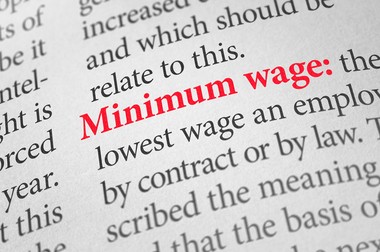
On Jan. 1, the minimum wage increased in 23 states. From a
23-cent increase in Michigan to an increase of $1.50 in Nebraska, people who
earn minimum wage are celebrating in many places across the nation.
Now, a major influence regarding the adjustments has been
the increased rate of inflation that has swept the nation within the past year.
This cause-and-effect situation was documented by Deirdre Kennedy, senior
payroll analyst of data research firm Wolters Kluwer.
Washington state
Washington state has one of the nation's highest base hourly
rates, going from $14.49 in 2022 to $15.74 at the start of 2023.
Connecticut, Florida, Nevada and Oregon
These four states are anticipating a bump in their
employees' minimum base pay by September, with Florida reaching $15 an hour by
2026.
New Jersey
New Jersey is set to raise its minimum wage to $15 an hour
by 2024.
Delaware, Illinois, Maryland and Rhode Island
These four states will have higher minimum wages for their
employees by 2025.
Virginia
The minimum wage of Virginia will be $15 an hour by 2026.
The District of Columbia
The current minimum wage in the District of Columbia is
$16.10 an hour, making it the highest dollar value for all minimum wages in the
U.S. However, an exception is made for tipped employees, students and part-time
workers.
These three categories of working people may receive pay
rates that are lower than the minimum wage according to special certificates
from the secretary of labor. These situations are commonly referred to as
receiving sub-minimum wage.
More about minimum wage in the US
In most cases, individual cities and municipalities have
higher minimum wage base pays than the minimum wage that is set at the state
level. That said, 20 states have a minimum wage that is either equal to or
lower than the federal minimum wage. Alternatively, other states have no
minimum wage whatsoever. In those cases, the federal minimum wage is the
default pay rate.
The minimum wage law, known as the Fair Labor Standards Act,
applies to the employees of enterprises that have a total annual gross volume of
sales or business of no less than $500,000. This law also applies to the
employees of smaller firms as long as the employees are engaged in interstate
commerce or the production of goods for commerce. For the record, this includes
employees who work in the transportation and communications industries and
regularly operate via interstate communications.
The minimum wage law also pertains to employees who work for
federal, state or local government agencies, as well as hospitals or schools.
Employers that employ full-time students who work in retail or for
service-related stores are also subject, as are those in the agriculture
industry. Both colleges and universities might be able to obtain a certificate
from the secretary of labor to declare that students can be paid as little as
85% of the applicable minimum wage.
For high school students who are at least 16 years old and
also happen to be enrolled in vocational education-based classes, there are
laws in place stating that they are not to be paid less than 75% of the minimum
wage for the state in which they work. However, one caveat is that this only
applies for as long as the student is enrolled in the vocation-focused
educational program. Additionally, the employer must obtain the proper
certification from the Secretary of Labor authorizing these conditions.
Turning our attention to people who often receive tips as
part of their job, waitstaff are perhaps in a position to experience the most
significant exemptions. Waitstaff usually accept a lower minimum wage rate
because the tips are viewed as making up for the wage difference. However, if
the employee's pay is not equal to minimum wage, then the employer is required
to reconcile the difference.
Note that exemptions tend to be narrowly drawn, so check with
a professional before assuming that an exemption applies to your situation.
Minimum wage changes can be triggered for a location when predetermined
conditions are altered, so careful monitoring to ensure compliance with the
latest wage levels for your business and region is a must.
©2023

MORE RECENT NEWS…
Sep 24, 2026
Job Openings? Look Toward Community Colleges
Employers are painfully aware that they face a 21st-century skills shortage. Companies are bent on hiring a "new collar" workforce to keep up with advances in technologies like artificial intelligence and automation. Read through to learn about an untapped resource.
Sep 23, 2026
With the IRS, As with Courts, You're Entitled to Representation
If you're having a problem with the IRS, you have rights! For one, you don’t have to go it alone. You are allowed to have an expert in your corner. Read through for details on the regulations that protect you.
Sep 22, 2026
Just What Are 'Competitive Wages'?
Inflation is a key challenge that businesses of every size face when developing compensation strategies. Read through to see how your business can position itself in the competitive wage war to attract and retain employees.
Sep 21, 2026
What the Gig Economy Is Doing to Traditional Payroll Structures
The gig economy, characterized by companies hiring short-term, contract or freelance workers, has been surging since the 2020 pandemic when people were mandated to work remotely. By current estimates, one-third of American workers are doing some form of gig work. Read through to learn more about what this arrangement is doing to traditional payroll structures.
More News & Press can be found in our Archive.
Panacea Payroll
3277 West Ridge Pike
Suite A101
Pottstown, Pennsylvania 19464
610-310-7615

MEMBER OF







WE'RE SERIOUS ABOUT SECURITY
Staying resilient from malicious threats, cyber and physical, is critical in providing the exemplary value our clients expect from us. To do this, we integrate the National Institute of Standards and Technology's (NIST) Cybersecurity Framework that ensures our security procedures, policies, and infrastructure are up to the highest standard possible. Financial institutions, infrastructure management, defense, healthcare, and other heavily regulated industries that rely on stringent information safeguards use the NIST Cybersecurity Framework. We review our security policies and procedures frequently to ensure newly identified threat and vulnerability information is incorporated. Our network infrastructure and physical locations are continuously monitored for anomalies and uninvited guests. Additionally, our incident response and business continuity plans are tested frequently to minimize the likelihood of backup failures.
© 2026 Panacea Payroll, All Rights Reserved.