High Quality Payroll and HR Services
Client Resources News & Tips Email Us 610-310-7615

Nov 24, 2023
Is This Your Situation: Confused About Time and Attendance Rules
Do you want to make sure you're following federal rules when it comes to paying your employees? Read through for a summary of Department of Labor rules.
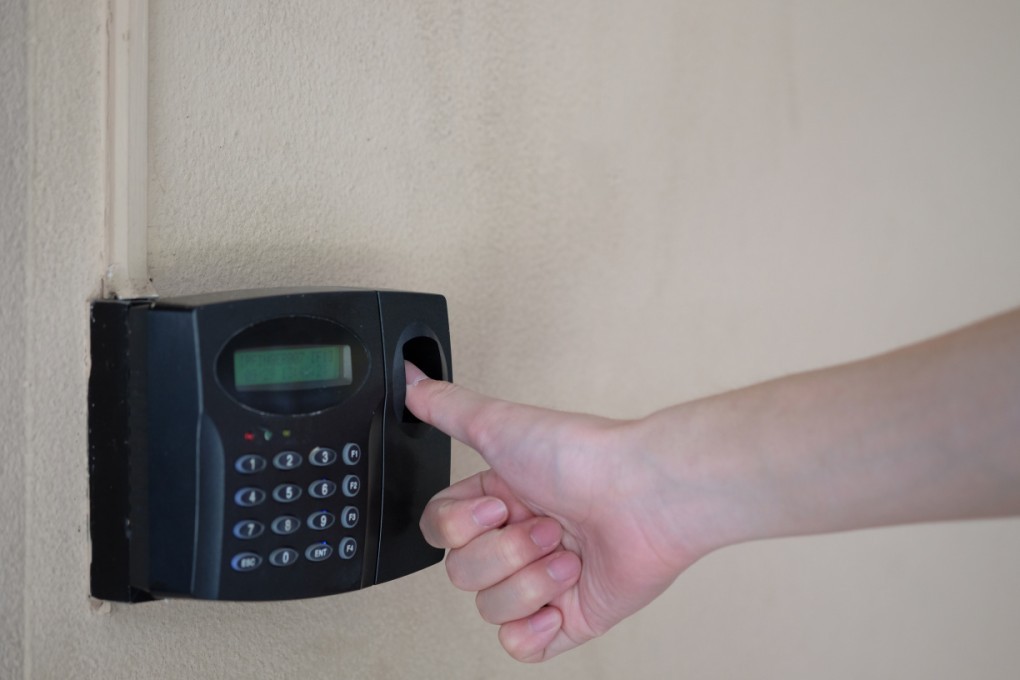
There are a lot of misunderstandings about what employers have to do — as opposed to what is simply customary — for nonexempt employees. ("Nonexempt" generally refers to employees who are not managerial and who thus are generally subject to the Fair Labor Standards Act—commonly known as the FLSA). Fortunately, the Department of Labor has published some Q&A guidance to remove any confusion and make it easier for employers to understand what their obligations are.
Overtime and Work Hours
Generally, for nonexempt employees, the FLSA requires overtime pay of at least time and a half after 40 hours of work in a workweek. There are a few exceptions, however, for certain emergency and medical personnel.
In addition, some states have also enacted overtime laws. The DOL notes that "where an employee is subject to both the state and federal overtime laws, the employee is entitled to overtime according to the higher standard (i.e., the standard that will provide the higher rate of pay)."
However, there are no legal limits regarding how many hours per day or per week employees can work if the employees are 16 years of age or older. Nor is there a cut-and-dried division between a full-time and part-time employee — whether employees work one hour a week or 50, they're still under the authority of the FLSA.
Weekend and Night Work
Employers often ask whether an employee's status changes due to weekend or night work: is overtime or some other special rate required? Although many employers have internal policies, there is no federal law on the matter. The DOL explains that the FLSA "does not require extra pay for weekend or night work." Of course, it's a different matter if the night or weekend work pushes the workweek above 40 hours. In that case, as noted above, most nonexempt employees must be paid time and a half.
Those are just federal regulations, however. Again, a state may have special rules for employers. For example, Massachusetts requires retail stores above a certain size to pay all nonexempt employees time and a half for Sunday work — even those employees who have not met the federal 40-hour threshold.
©2023

MORE RECENT NEWS…
Aug 27, 2026
Where Remote Work Stands Today
The pandemic reshaped how and where work gets done, disrupting the U.S. office market and accelerating the shift toward remote and hybrid models. While return-to-office efforts have focused on productivity, collaboration and culture, they have also been influenced by practical concerns such as long-term leases and underused office space. Read through to see how hybrid work continues to evolve.
Aug 26, 2026
Protecting Your Company From Online Defamation
Your company has terminated an employee — and now you're bracing for what they might say about their former workplace online. Social media can turn a disgruntled former worker into a very public critic. Read through for an overview of ways to prevent disparagement through culture and policy, deter it with a nondisparagement clause and respond to it with legal help.
Aug 25, 2026
Newsflash: Enhancements to the Paid Family and Medical Leave Tax Credit
Employers, including small businesses, that provide paid family and medical leave to their employees may be eligible for an employer tax credit. Read through to read about several new enhancements to this credit under the Working Families Tax Cuts.
Aug 24, 2026
Protect Your Business From Cybersecurity Attacks
No matter what the size of the organization, all businesses face the threat of cybersecurity attacks. Small businesses in particular feel vulnerable to cyberattacks. Read through for a discussion about what small businesses are doing to secure their data.
More News & Press can be found in our Archive.
Panacea Payroll
3277 West Ridge Pike
Suite A101
Pottstown, Pennsylvania 19464
610-310-7615

MEMBER OF









WE'RE SERIOUS ABOUT SECURITY
Staying resilient from malicious threats, cyber and physical, is critical in providing the exemplary value our clients expect from us. To do this, we integrate the National Institute of Standards and Technology's (NIST) Cybersecurity Framework that ensures our security procedures, policies, and infrastructure are up to the highest standard possible. Financial institutions, infrastructure management, defense, healthcare, and other heavily regulated industries that rely on stringent information safeguards use the NIST Cybersecurity Framework. We review our security policies and procedures frequently to ensure newly identified threat and vulnerability information is incorporated. Our network infrastructure and physical locations are continuously monitored for anomalies and uninvited guests. Additionally, our incident response and business continuity plans are tested frequently to minimize the likelihood of backup failures.
© 2026 Panacea Payroll, All Rights Reserved.