High Quality Payroll and HR Services
Client Resources News & Tips Email Us 610-310-7615

Apr 08, 2026
Cross-Training and Upskilling: Building a Stronger Workforce
The success of an organization relies largely on the strength of its workforce. Today's unpredictable business climate requires employees to be nimble. Read through for a discussion on why cross-training and upskilling your staff should be a top priority.
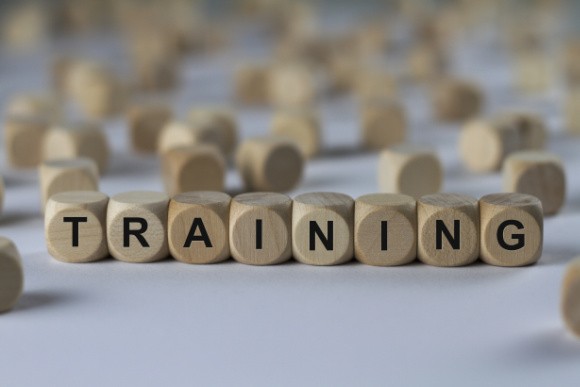
The job market is at a crossroads. Many companies are facing the challenges of talent shortages along with the disruptive effects of artificial intelligence. At the same time, employees are seeking ways to develop professionally in their careers. Cross-training and upskilling have become vital for organizations to stay ahead of this trend by making sure their employees can adapt and thrive in times of dramatic change.
First, it's important to understand the benefits of cross-training and upskilling for an organization. Cross-training involves training employees to have new transferable skills that are not essential for their current role but can be applied to working with different teams. Having a versatile staff capable of tackling work that goes beyond their immediate responsibilities is a strategic benefit.
If the organization is developing its AI capabilities, it might be wise to cross-train employees who are interested in learning these skills. At some point, they may be called upon to collaborate with other departments. The company need not look any further than its own already trained employees to replace a departing employee.
In upskilling, employees stay relevant and ready to take on evolving demands through advanced training. Upskilling takes an employee's current knowledge and skills to a new level and is mutually beneficial for both the employee and the organization. Employees who feel valued by their company are more likely to stay in their present job, with greater possibilities for advancement. By providing professional training, the employee can easily shift into new roles when needed.
Take a wide look
Before starting additional training programs, companies should review their current staffing situation to see what departments are the most vulnerable. Any training program needs to consider where it will have the most impact on reaching specific companywide goals. Many companies have discovered that a one-size-fits-all approach to training does not usually work. The training must be engaging and focused on what skills the individual needs to perform their job better. Some examples of targeted learning include self-paced online courses, mentoring and shadowing seasoned employees, lunch-and-learn sessions and industry-recognized certification programs.
Organizations need to prioritize which employees should receive additional training to make the most impact. Likely candidates would be those who show they are ready for the next step by being a standout in their current role. Such employees may eventually take on a leadership role. The training they receive today can prepare them to step in to a new role with confidence and knowledge. Additionally, those working in the rapidly evolving fields of technology, health care, retail and hospitality need to keep their competency levels high — they all rely on staying ahead of emerging trends.
Cross-training and upskilling are crucial investments for the future success of any organization. Company leaders need to promote a corporate culture of lifelong learning that encourages personal and professional growth for employees.
© 2026

MORE RECENT NEWS…
Sep 24, 2026
Job Openings? Look Toward Community Colleges
Employers are painfully aware that they face a 21st-century skills shortage. Companies are bent on hiring a "new collar" workforce to keep up with advances in technologies like artificial intelligence and automation. Read through to learn about an untapped resource.
Sep 23, 2026
With the IRS, As with Courts, You're Entitled to Representation
If you're having a problem with the IRS, you have rights! For one, you don’t have to go it alone. You are allowed to have an expert in your corner. Read through for details on the regulations that protect you.
Sep 22, 2026
Just What Are 'Competitive Wages'?
Inflation is a key challenge that businesses of every size face when developing compensation strategies. Read through to see how your business can position itself in the competitive wage war to attract and retain employees.
Sep 21, 2026
What the Gig Economy Is Doing to Traditional Payroll Structures
The gig economy, characterized by companies hiring short-term, contract or freelance workers, has been surging since the 2020 pandemic when people were mandated to work remotely. By current estimates, one-third of American workers are doing some form of gig work. Read through to learn more about what this arrangement is doing to traditional payroll structures.
More News & Press can be found in our Archive.
Panacea Payroll
3277 West Ridge Pike
Suite A101
Pottstown, Pennsylvania 19464
610-310-7615

MEMBER OF





WE'RE SERIOUS ABOUT SECURITY
Staying resilient from malicious threats, cyber and physical, is critical in providing the exemplary value our clients expect from us. To do this, we integrate the National Institute of Standards and Technology's (NIST) Cybersecurity Framework that ensures our security procedures, policies, and infrastructure are up to the highest standard possible. Financial institutions, infrastructure management, defense, healthcare, and other heavily regulated industries that rely on stringent information safeguards use the NIST Cybersecurity Framework. We review our security policies and procedures frequently to ensure newly identified threat and vulnerability information is incorporated. Our network infrastructure and physical locations are continuously monitored for anomalies and uninvited guests. Additionally, our incident response and business continuity plans are tested frequently to minimize the likelihood of backup failures.
© 2026 Panacea Payroll, All Rights Reserved.