High Quality Payroll and HR Services
Client Resources News & Tips Email Us 610-310-7615

Jul 02, 2024
Completing the Form I-9
Form I-9 is a federal employment eligibility verification form. Use it to verify the identity and employment authorization of all hires — citizens and noncitizens. Read through to learn how it works and why it is so important.
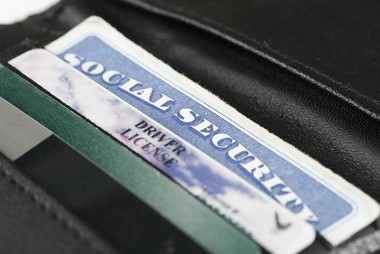
Form I-9 asks your employees to present documents to attest to their identity and employment authorization. It's your job to make sure the documents seem genuine and relate to the employee.
Form I-9 is required by the Immigration Reform and Control Act of 1986 to verify the identity and legal work eligibility of both citizens and noncitizens. If you don't examine the required documents for I-9 verification, you risk legal complications and fines. Verifying each employee's eligibility for employment is a critical part of the hiring process; make it part of your new hire onboarding checklist.
You will need to see one of the following documents:
- U.S. passport or passport card.
- Permanent resident card or alien registration receipt card.
- Foreign passport that contains a temporary I-551 stamp or temporary notation on a machine-readable immigration visa.
- Employment authorization document that contains a photograph.
Other documents may also be valid but must be on the list of accepted documents. If no single document can be provided, various combinations of other documents (like a state ID and social security card) are listed as acceptable. Keep in mind that there are special rules for potential employees under 18 years of age.
Completing the form
It is your responsibility to ensure that Section 1 of the I-9 is completed properly and in a timely manner. In Section 2, record the required information about the document(s) presented, note the date that employment begins then sign and date the certification.
These steps present a problem for employees who do not live near your office. Fortunately, by checking a box on the form, you may indicate that you did not examine the documents in person.
You may also complete the Form I-9 electronically; in this way, you are more easily able to correct errors or typos. But you can correct errors made on paper forms in Section 2 or Section 3 by drawing a line through the incorrect information and entering the correct or omitted information. Then, initial and date the correction or omitted information. Do not overwrite, erase, obscure or backdate a form.
Next steps
After the I-9 is filled out and signed, you do not file the form with the U.S. Citizenship Office or U.S. Immigrations and Customs Enforcement. Instead, you retain the form.
Please note:
- You must have a completed form for each person on your payroll.
- Each form must be stored for three years after the date of hire, or for one year after employment is terminated — whichever is later.
- Forms must be made available for inspection if requested by U.S. government officials from the Department of Homeland Security, Department of Labor or Department of Justice.
Further steps
If you rehire an employee within three years of their last date of employment with your company, or if an employee has a legal name change, complete the rehire section (Supplement B) of the I-9. This will help verify that none of the employee's documents have expired.
You may conduct an internal audit of your existing Form I-9s to ensure ongoing compliance. Completing an audit of all I-9s at once avoids any perception of discriminatory or retaliatory audits. You should let employees know the primary reason for the internal audit: that you are addressing any Form I-9 deficiencies that may be revealed by the audit. If you discover an error or omission in Section 1 of an employee's Form I-9, you should ask the employee to correct the error by drawing a line through the incorrect information and entering the correct or omitted information. Then, initial and date the correction or omitted information. You may not ask employees who are already hired to complete new I-9s.
Penalties for violations of the employer sanctions provision and the anti-discrimination provision of the Immigration and Nationality Act may be imposed even if an internal audit has been performed.
©2024

MORE RECENT NEWS…
Aug 27, 2026
Where Remote Work Stands Today
The pandemic reshaped how and where work gets done, disrupting the U.S. office market and accelerating the shift toward remote and hybrid models. While return-to-office efforts have focused on productivity, collaboration and culture, they have also been influenced by practical concerns such as long-term leases and underused office space. Read through to see how hybrid work continues to evolve.
Aug 26, 2026
Protecting Your Company From Online Defamation
Your company has terminated an employee — and now you're bracing for what they might say about their former workplace online. Social media can turn a disgruntled former worker into a very public critic. Read through for an overview of ways to prevent disparagement through culture and policy, deter it with a nondisparagement clause and respond to it with legal help.
Aug 25, 2026
Newsflash: Enhancements to the Paid Family and Medical Leave Tax Credit
Employers, including small businesses, that provide paid family and medical leave to their employees may be eligible for an employer tax credit. Read through to read about several new enhancements to this credit under the Working Families Tax Cuts.
Aug 24, 2026
Protect Your Business From Cybersecurity Attacks
No matter what the size of the organization, all businesses face the threat of cybersecurity attacks. Small businesses in particular feel vulnerable to cyberattacks. Read through for a discussion about what small businesses are doing to secure their data.
More News & Press can be found in our Archive.
Panacea Payroll
3277 West Ridge Pike
Suite A101
Pottstown, Pennsylvania 19464
610-310-7615

MEMBER OF








WE'RE SERIOUS ABOUT SECURITY
Staying resilient from malicious threats, cyber and physical, is critical in providing the exemplary value our clients expect from us. To do this, we integrate the National Institute of Standards and Technology's (NIST) Cybersecurity Framework that ensures our security procedures, policies, and infrastructure are up to the highest standard possible. Financial institutions, infrastructure management, defense, healthcare, and other heavily regulated industries that rely on stringent information safeguards use the NIST Cybersecurity Framework. We review our security policies and procedures frequently to ensure newly identified threat and vulnerability information is incorporated. Our network infrastructure and physical locations are continuously monitored for anomalies and uninvited guests. Additionally, our incident response and business continuity plans are tested frequently to minimize the likelihood of backup failures.
© 2026 Panacea Payroll, All Rights Reserved.